ATTILA
The Most Expensive Mistakes People Make When Choosing Stone
The costliest stone mistakes are made before anything is cut. Choosing from a small sample, underestimating how many slabs a layout needs, trusting a product name without checking what the stone actually is, and matching the stone to a photo rather than to how you cook are the four that cause the most regret. Here's how to avoid each one, from the team at Attila's Natural Stone in Campbellfield, Melbourne.
Mistake 1: choosing from a sample instead of the slab
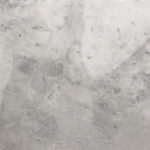
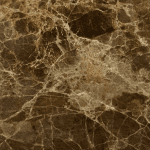
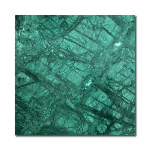
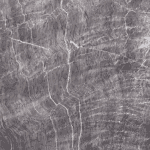
A 100mm sample tells you the colour family. It tells you nothing about the movement.
Natural stone veining runs the length of a slab and changes across it. A sample cut from one corner can look calm and grey while the slab it came from has a dramatic gold vein sweeping through the middle. Neither is wrong, but one of them is going to end up on your island.
This is the single most common source of disappointment we see. People approve a sample, the benchtop goes in, and the kitchen doesn't look like what they pictured. By then the stone is cut.
Look at the full slab, stand back from it, and photograph it. Then work out where your island and splashback will fall within it.
Mistake 2: assuming the name on the slab is the stone you're getting
Stone names are marketing names, not classifications. The same commercial name can be applied to material from different quarries with different hardness and different behaviour in a kitchen.
The classic example is dolomite sold as quartzite. They look similar, and a buyer who has been told "quartzite" expects quartzite performance. Dolomite is a good stone and a popular choice, but it's softer than quartzite and more prone to etching, so the care routine is different. Someone who thinks they bought a bulletproof surface will treat it accordingly, and that's when the marks appear.
Ask what the material actually is. If you're comparing the two, our guide to dolomite benchtops sets out where each one sits.
Mistake 3: getting the slab count wrong
This one hits the budget hardest and it's almost always a measuring problem rather than a stone problem.
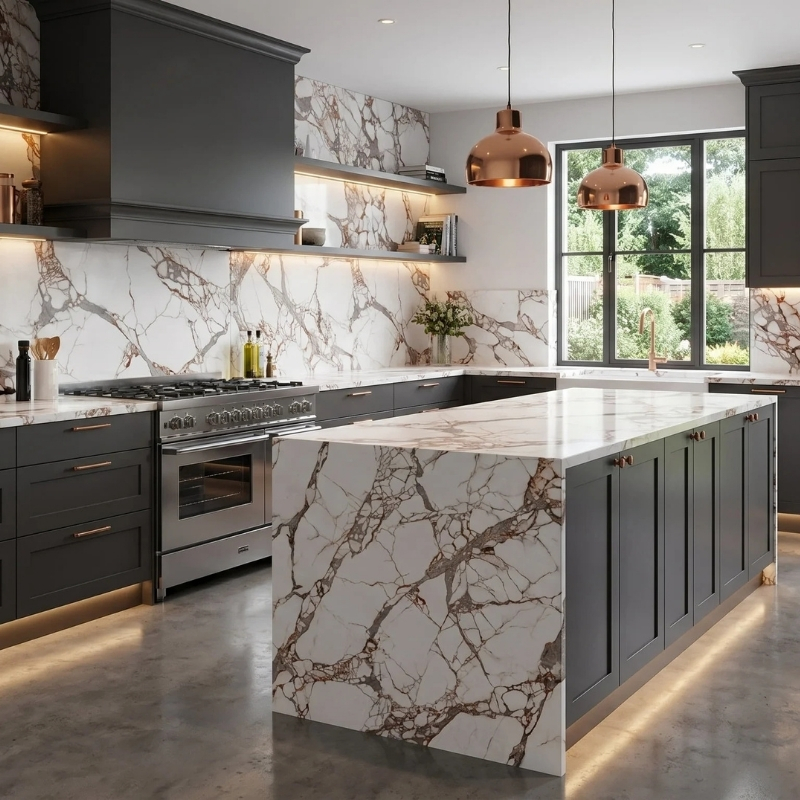
A layout that fits neatly into one slab costs a fraction of a layout that needs a second slab for a return panel, a waterfall end or a full height splashback. People plan a kitchen without knowing the slab dimensions, then discover the design spills over into slab two by 200mm.
A few things worth sorting before you buy:
- Know the slab sizes you're working with and how your benchtop nests into them
- Decide on waterfall ends and splashbacks early, because both eat slab
- If you want bookmatched veining, you need two consecutive slabs from the same block reserved together
- Allow for the offcut. Small changes in layout can bring a two slab job back to one
Bring your measurements when you visit. It takes five minutes to work out whether your design fits one slab or needs two, and that conversation can move the total significantly.
Mistake 4: choosing the stone before you've thought about the kitchen
Stone that suits a display kitchen doesn't always suit a working one.
A soft white marble in a household where nobody cooks and everything gets wiped immediately will look perfect for twenty years. The same stone in a house with teenagers, a bottle of olive oil permanently on the bench and a habit of leaving cut lemons around will collect etch marks in the first year.
Neither stone is at fault. The mismatch is.
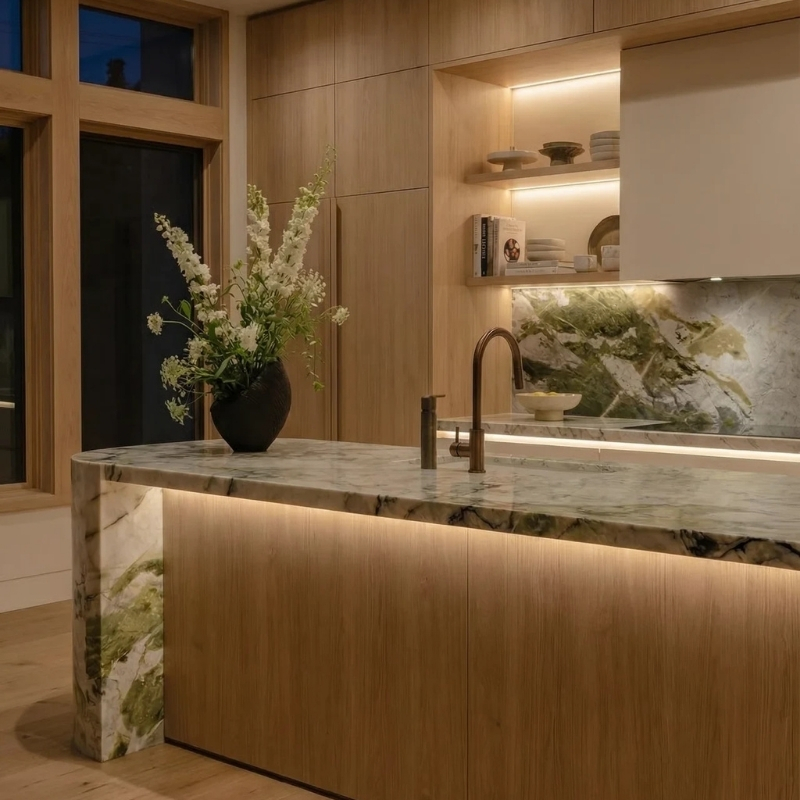
Be honest about how your kitchen runs, then choose accordingly. Granite and quartzite for heavy use. Dolomite as the middle ground. Marble where the look leads and the habits support it. Porcelain if you genuinely want to think about it never. The full range of natural stone kitchen benchtops covers all of them, and the right answer is different for every household.
Mistake 5: ignoring the finish
People spend weeks choosing a stone and about four seconds choosing the finish, which is backwards. Finish changes how a stone looks, how it wears and how much maintenance you notice.
Polished surfaces reflect light and push veining forward, which suits a formal kitchen. They also show fingerprints, water marks and light etching more clearly, especially on dark stone.
Honed surfaces read softer and matt. They hide day to day marking far better, though they can absorb slightly more readily if the sealing is neglected.
Seeing both finishes of the same stone next to each other settles it quickly. Our comparison of honed and polished natural stone covers where each one belongs.
Mistake 6: budgeting the stone and forgetting everything after it
The slab is one cost. The fabrication and installation carried out by your stonemason is another, and it covers the template, cutting, edge profile, cut-outs for the sink and cooktop, polishing and install.
When those two costs are bundled into a single quote, it's hard to tell what you're paying for the stone and what you're paying for the work. Buying the slab direct at wholesale and engaging your stonemason separately makes both numbers visible. It also means the stone doesn't carry a markup before the labour is added.
Line your stonemason up before you choose, not after. If the layout is complicated, it's worth having them look at the slab with you.
Frequently Asked Questions
What is the biggest mistake when choosing a stone benchtop?
Choosing from a small sample instead of viewing the full slab. Veining varies across a slab, so a sample only shows the colour family. Seeing the whole slab and working out where the movement falls on your island is what prevents the most common form of regret.
How do I know if a stone will suit my kitchen?
Start with how the kitchen is actually used rather than how it looks in a photo. Heavy cooking, frequent spills and a relaxed approach to wiping down points towards granite, quartzite or porcelain. Calmer kitchens can carry marble and dolomite comfortably.
Do I need to seal a natural stone benchtop?
Yes. Natural stone has some porosity, so a penetrating sealer slows absorption and gives you time to wipe spills away. Your stonemason usually seals on installation. After that, reseal on the interval your sealer recommends.
Avoid all of this by seeing the stone first
Every mistake on this list is fixed by the same thing: looking at the actual slab before you commit, with your measurements in hand and a realistic view of how your kitchen runs.
Visit the Attila's Natural Stone showroom and warehouse in Campbellfield to walk the racks, compare stones and finishes side by side under the same light, and choose the exact slab for your project at wholesale pricing. No appointment needed.
Share this Post