ATTILA

Sintered Porcelain Vs. Porcelain: What’s The Difference?
Picture this: you're standing in a showroom, staring at two stones that look practically identical. The salesperson is using terms like "sintered" like you should know what that means. You feel incredibly frustrated. The sintered porcelain vs. porcelain debate isn't just industry jargon, it’s about finding the right fit for your property.
Both types of porcelain products are made from great materials, but they're not the same thing. One's been around forever, the other's the new kid on the block with some serious upgrades. Let’s break down the differences.
REGULAR PORCELAIN: THE RELIABLE WORKHORSE
Think of regular porcelain as that friend who's always there for you. It's made from refined clay, fired at incredibly high temperatures, and it just works. Dense, strong, low water absorption – it ticks all the boxes for most homes.
We've been working with porcelain for years, and it handles daily life beautifully. Your morning coffee spills, the kids' craft disasters, and even times when you accidentally drop your hot pan (we've all been there).
SINTERED PORCELAIN: PORCELAIN'S OVERACHIEVING SIBLING
Sintered porcelain is where things get even more interesting. Imagine taking all those natural minerals and subjecting them to the kind of heat and pressure that would make a volcano jealous. The result is an ultra-compact surface that's basically porcelain on supercharge.
The manufacturing process mimics what happens in nature over thousands of years. Except instead of waiting around, it happens in a factory under controlled conditions to purposefully create a beautiful product you love.
DIFFERENCES THAT MATTER
From our experience helping Melbourne families navigate these choices, here's what really sets sintered stone vs. porcelain apart:
HOW IT'S PRODUCED
Sintered porcelain is formed with a process called sintering, where a blend of natural minerals (like quartz, feldspar, silica, and clay) is compacted under extreme pressure - typically around 400 bars - and then fired at temperatures 1200+°C. This mimics the natural formation of stone over thousands of years but in a quicker time, resulting in an ultra-dense, non-porous, incredibly durable surface.
Normal porcelain is produced using a more traditional ceramic process: clay and minerals are shaped and fired at high heat, but without the intense pressure or advanced compaction of sintering. This creates a less dense product, usually formed as thinner tiles, with lower capacity to bend/flex and more limited applications.
Both sintered porcelain and porcelain undergo kiln firing, it’s the combination of high pressure and controlled particle fusion in sintered porcelain that sets it apart in strength, stability, and performance for demanding surfaces like benchtops.
HEAT AND SCRATCH RESISTANCE
Regular porcelain is tough, but sintered porcelain withstands hot pans and sharp knives exceptionally well. We had one client who was convinced she'd ruined her new sintered benchtop when she placed a scalding pot straight from the stove on it. But there wasn’t a mark! Sintered porcelain also boasts higher UV resistance and impact resistance than standard porcelain so it can stand up to the toughest treatment.
THICKNESS FLEXIBILITY
Regular porcelain is usually 9-12mm thick and it doesn't need to be chunky to be strong. You can go for a more slimline aesthetic and it's strong enough to cope with daily demands. The most common thickness for sintered porcelain in Melbourne homes is 12 millimetres, particularly for kitchen benchtops.
COST
Sintered porcelain may be more expensive on the market, but we offer it at the same price as porcelain.
SO WHICH ONE'S RIGHT FOR YOU?
For most indoor applications, like bathroom tiles, kitchen splashbacks, and benchtops, quality porcelain is fantastic. It's proven, reliable, and won't break the bank. But if you're planning something special — think an alfresco kitchen that needs to handle Melbourne's weather mood swings, a busy family kitchen, or you just want that premium feel — sintered porcelain might be worth the investment.
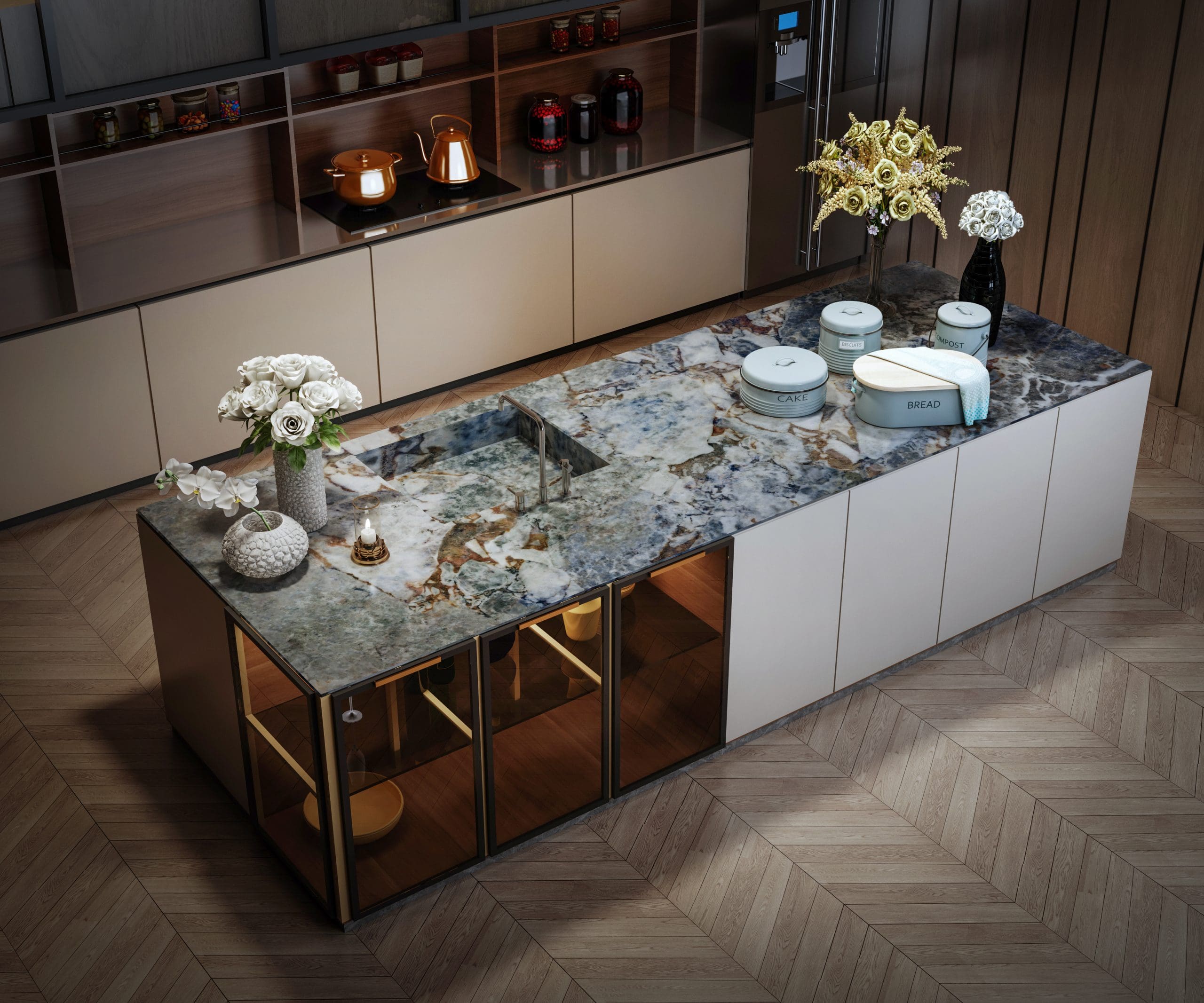
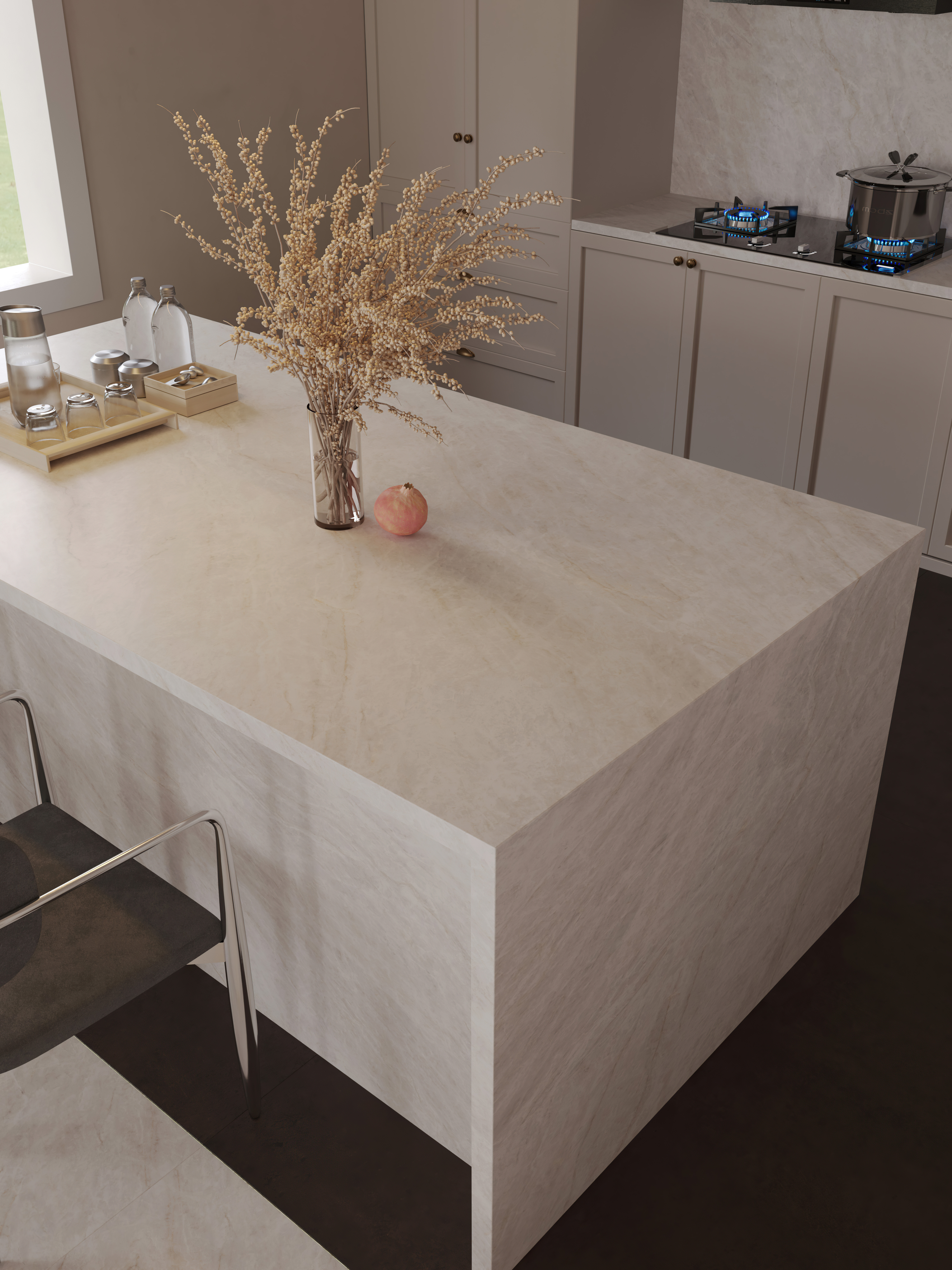
We recently worked with a family who were building their forever home. They chose sintered porcelain for their kitchen island because they wanted something that could handle their teenager's cooking experiments and still look perfect for dinner parties. Years later, it still looks brand new.
COME SEE FOR YOURSELF
Reading about these materials is one thing, but feeling the difference is another story entirely. You need to see how they catch the light, feel their weight, and imagine them in your space. Our Melbourne showroom stocks Australia's largest natural stone collection, plus the full range of porcelain and sintered options.
Come visit our showroom so you can touch the products, compare them, ask any questions you might have. At the end of the day, the best material is the one that works for your life, your budget, and your vision. Chat with our friendly team and let's figure out what that looks like for you.
Share this Post