ATTILA
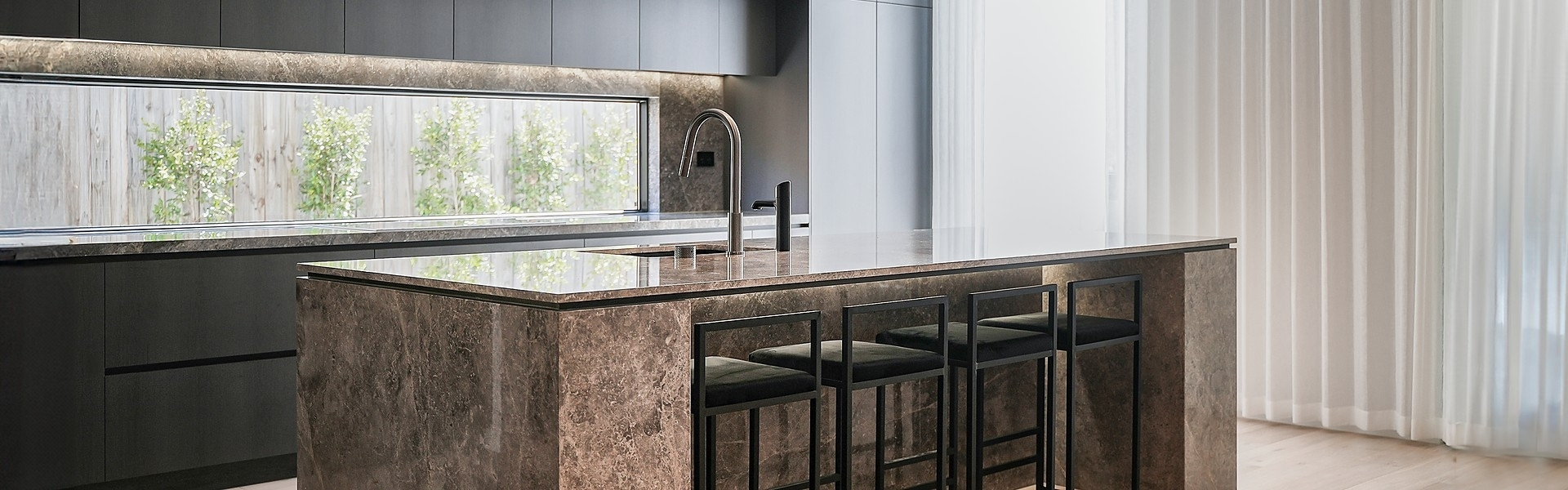
How Natural Stone Is Priced: Why Two Marble Slabs Can Cost Worlds Apart
Two slabs can carry the same stone name and sit at very different prices. The gap comes down to the quarry and the block they were cut from, the rarity of the colour, how consistent the veining is, the slab size, the thickness, the finish, and how many hands the slab passed through before it reached you. Here's what each factor actually does to the number, explained by Attila's Natural Stone in Campbellfield, Melbourne.
It starts at the quarry, not the warehouse
Natural stone is cut from blocks extracted out of a quarry, and not every block is equal. One block can produce slabs with clean, consistent background and beautiful movement. The block beside it can produce slabs with fractures, mineral patches or muddy colour.
Quarries grade their output, and that grading follows the stone all the way to the warehouse. A premium grade slab and a commercial grade slab from the same quarry, carrying the same name, can sit a long way apart on price.
This is why "how much is marble" has no single answer. Marble isn't a product with a price. It's a category containing hundreds of stones from dozens of countries at every grade.
Rarity and demand
Some specifiers still assume resin terrazzo scratches easily because the binder is softer than cement, but understanding what is terrazzo helps clarify how the stone aggregate contributes to durability. In practice, the embedded stone carries the wear load. Regular recoating of a resin topcoat keeps it looking sharp, whereas cement terrazzo relies on repolishing every decade or so. Both withstand commercial foot traffic when maintained.
Design Flexibility and Aesthetic Options
Some stones are simply harder to get.
A quarry might produce a limited volume each year, or the colour that everyone wants might only appear in part of the deposit. When a stone becomes fashionable, demand rises against a supply that can't respond quickly, and the price follows.
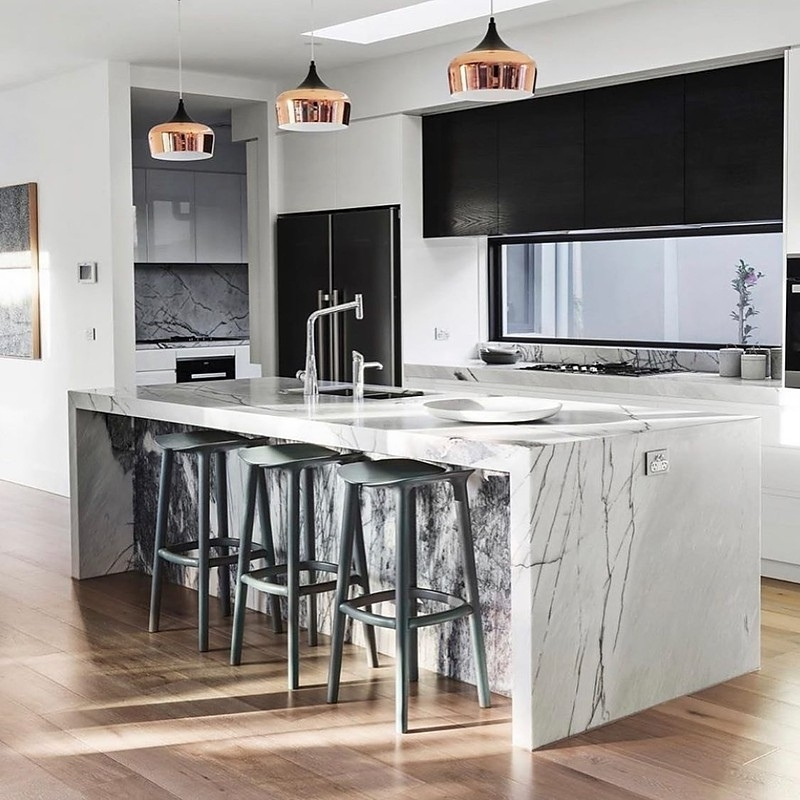
Trend plays a real role here. The white stones with soft grey veining that dominate Melbourne kitchens command a premium partly because everyone wants them. A warmer stone with more colour movement, cut from the same quality block, can cost noticeably less while performing identically. If budget matters more than following the trend, that's often where the value sits. It's worth walking the whole rack before deciding, including the marble benchtops range in colours you hadn't considered.
Slab size, thickness and yield
Three physical factors move the number:
- Size. Larger slabs cost more outright, but they can reduce the total cost if they let your benchtop come out of one slab instead of two.
- Thickness. 20mm is standard for benchtops. Thicker material costs more per slab.
- Yield. This is the one people miss. The price that matters isn't the price per slab, it's the price for your benchtop. A layout that nests efficiently into a slab is cheaper than a layout that wastes half of a second one.
Bring your measurements when you visit and the yield question gets answered in a few minutes rather than after the job is quoted.
Finish and processing
The same slab costs differently depending on how it's finished. Polishing takes more processing than honing. Leathered, brushed and textured finishes involve additional steps again.
Finish also affects how the stone looks, which means people often choose it on appearance and get surprised by the price difference. Worth understanding both sides before you decide, which our guide to honed and polished natural stone walks through.
Origin, freight and how many hands it passes through
Stone travels. A slab quarried in Brazil, Italy, Turkey or Greece carries freight, handling and import costs by the time it reaches Melbourne, and those costs vary with distance, container rates and the weight of the material.
Then there's the supply chain. Every party between the quarry and your kitchen adds a margin. A slab bought through several layers carries several markups.
This is the part you have most control over. Buying direct from a warehouse that imports its own stock at wholesale pricing removes the layers in between. It's also why stock on hand matters: material sitting in Campbellfield has already landed, so you're not paying for an indent order or waiting on a container.
Frequently Asked Questions
Why is one marble more expensive than another?
Because marble is a category, not a product. Price varies with the quarry and block grade, the rarity of the colour, how consistent the veining is, the slab size and thickness, the finish, and the freight and markups between the quarry and you.
Is more expensive stone more durable?
Not necessarily. Price reflects rarity, appearance and grade more than hardness. A fashionable white marble can cost more than a granite that will outlast it in a working kitchen. Choose durability on the stone type and appearance on the slab.
How can I get a better price on natural stone?
Buy the slab direct at wholesale instead of through a chain of suppliers, choose from stock already landed rather than ordering in, and optimise your layout so the benchtop comes out of one slab. Looking beyond the most fashionable colours also helps.
Does thickness change the price much?
Yes. 20mm is standard for benchtops and keeps both the stone and fabrication costs down. A 40mm look is usually built up with a mitred edge, which uses more material and takes considerably more fabrication time.
See the spread for yourself
The quickest way to understand stone pricing is to stand in a warehouse and look at fifty slabs. The difference between a premium grade slab and a well priced one becomes obvious in about a minute, and so does the point at which the extra spend stops mattering for your kitchen.
Visit the Attila's Natural Stone showroom and warehouse in Campbellfield to compare slabs across the full price range, ask what's driving the difference, and choose your exact slab at wholesale pricing. No appointment needed.
Share this Post