ATTILA
Cement Terrazzo vs Resin Terrazzo: Which Should You Choose?
What Sets the Two Terrazzo Systems Apart
Terrazzo has been part of Melbourne’s design language since the post-war boom, yet product innovation means today’s buyers face a choice their grandparents never considered: a traditional cement matrix or a lighter, thinner resin-bound alternative. While both combine decorative stone, marble or recycled glass chips with a binder, the technical make-up influences everything from slab thickness to expected service life.
A cement matrix is a mixture of Portland cement, marble dust and pigments poured on site or supplied as pre-cast tiles. It cures chemically, producing a dense, breathable surface that can be honed or polished. Resin terrazzo swaps cement for an epoxy or polyurethane binder. The resin locks in the chips, cures faster and produces a seamless, non-porous surface.
Because of that difference in binder, the two systems behave differently once in place. Understanding those behaviours is the fastest way to select the right option. Worth knowing before you read on: Attila supplies cement-based terrazzo as precast slabs, in 3200 x 1600 x 20 mm and 2400 x 1600 x 20 mm, for both indoor and outdoor use, so this guide explains how the two binders compare while pointing you toward the system we actually stock. You can review full slabs in person at our terrazzo showroom in Melbourne.
Durability myths debunked
Some specifiers still assume resin terrazzo scratches easily because the binder is softer than cement, but understanding what is terrazzo helps clarify how the stone aggregate contributes to durability. In practice, the embedded stone carries the wear load. Regular recoating of a resin topcoat keeps it looking sharp, whereas cement terrazzo relies on repolishing every decade or so. Both withstand commercial foot traffic when maintained.
Design Flexibility and Aesthetic Options
Colour and aggregate choice drive most customer conversations. Cement terrazzo limits aggregate size to about 20 mm because larger chips create voids that weaken the matrix. Resin comfortably suspends chips up to 40 mm, giving designers freedom to chase bold, chunky patterns.
Pigment take-up differs as well. Cement’s mineral base subtly mutes colours, producing earthy tones perfect for Brunswick’s heritage shopfronts. Resin binds dye molecules more evenly, allowing vivid greens, deep charcoals and on-brand corporate hues. Metallic pigment, impossible in cement, is common in resin for fashion retail fit-outs.
Installation, Lead Times and Cost Considerations
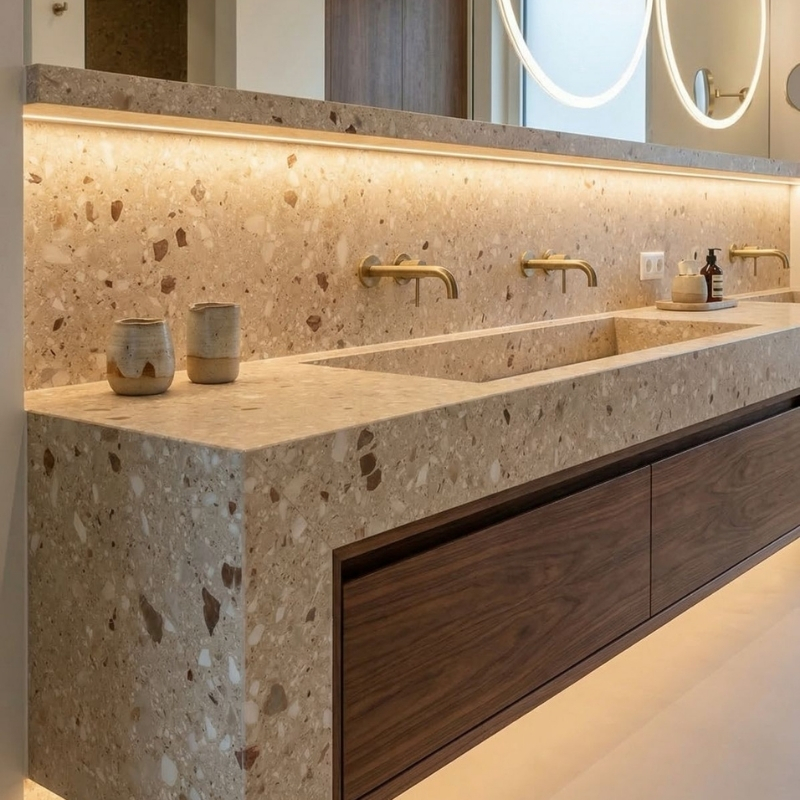
Installation is where the two systems separate. A cement terrazzo benchtop is a dense precast slab, so it is heavier to move and lift, and it needs solid, level cabinetry underneath with proper support for any island or overhang. Resin (epoxy) terrazzo can be cast lighter and thinner, which helps when a benchtop has to be carried up stairs or fit into a lift for an apartment kitchen, and it puts less load on the joinery below.
Curing changes the timeline. An epoxy terrazzo top cures faster, so it can be ground, polished and installed sooner, and the turnaround from template to fitted benchtop is shorter. A cement terrazzo top needs longer to cure before it can be ground and sealed, which stretches the lead time and shifts more of the cost into labour and finishing rather than raw material.
Preparation is non-negotiable for both. The cabinetry has to be solid and dead level, because a base that flexes is one of the most common causes of the hairline cracks that appear a year or two after installation, and the more brittle cement terrazzo is less forgiving of it. A good installer will level the run, brace the overhangs, place the seams where they will handle everyday movement, and seal a cement top from day one, since it is porous and needs sealing to stay looking its best.
Environmental notes
Cement terrazzo contains a higher percentage of recycled aggregate by mass, and manufacturers now offer low-carbon cement blends to reduce embodied CO₂. Resin’s petrochemical binder is less eco-friendly, but its long service life and ability to incorporate post-consumer glass chips offset some impact. Both qualify for Green Star points when specified correctly.
Making the Call for Your Project
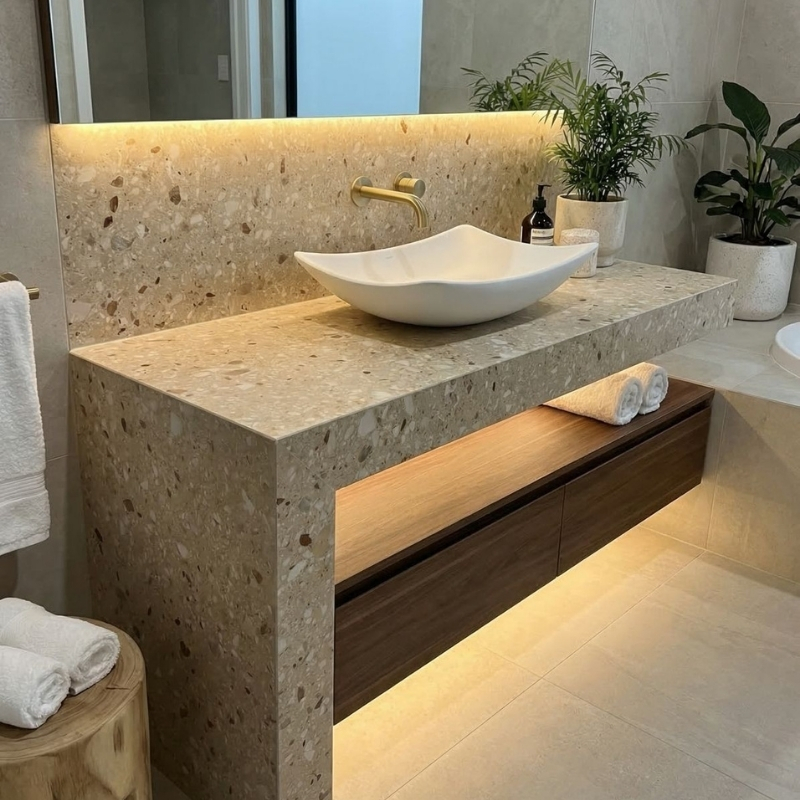
Choosing between cement and resin ultimately means matching performance to setting.
Cement excels in:
- Period homes where breathability matters
- Alfresco areas exposed to Melbourne’s winter damp
- Projects chasing a muted, classic palette
Resin shines in:
- Tight construction programs needing rapid hand-over
- Interiors demanding vivid or custom corporate colours
- Light-weight retrofits on suspended slabs
By mapping these practical considerations against your design intent, you’ll arrive at a terrazzo system that serves its purpose for decades, not just the first photoshoot. For most Melbourne homes and outdoor spaces, cement-based terrazzo covers the brief, and because Attila carries it as precast slabs at wholesale prices direct to the public, you can compare full slabs side by sid
Share this Post