ATTILA
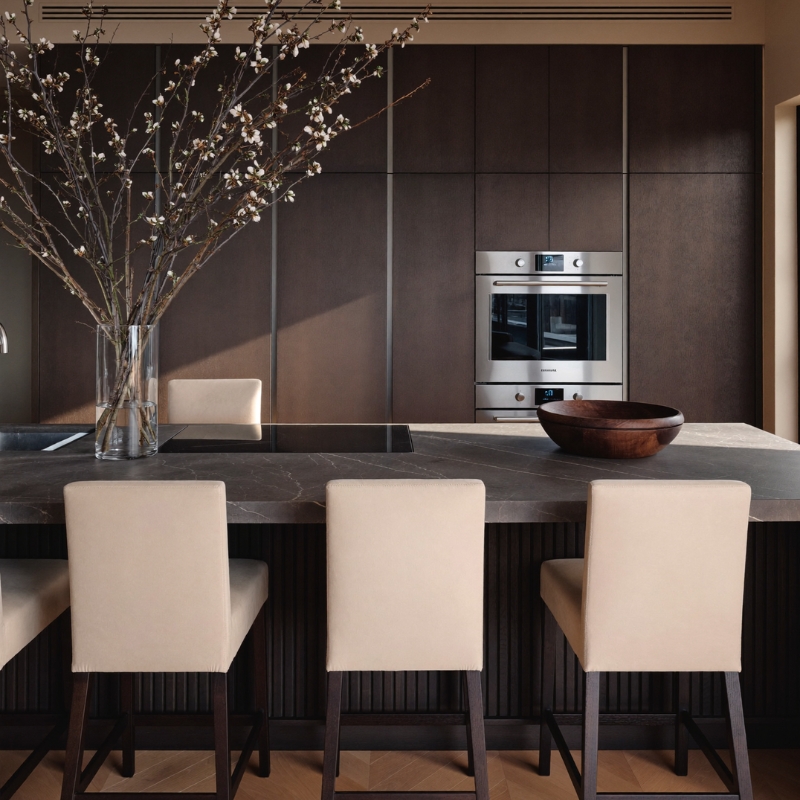
Honed vs Polished Finishes: Choosing the Right Look for Your Melbourne Stone Benchtop
A new stone surface lifts a whole kitchen. But the finish you land on (honed or polished) quietly shapes everything after that, from how deep the colour reads to how much you’ll fuss over it day to day.
So give it a minute before you commit. The right call extends both the life and the liveability of the slab and makes sure your stone benchtops in Melbourne suit how you actually cook, not just how they look on a Saturday.
Here’s the catch most people miss: a finish looks like almost nothing on a palm-sized sample compared with how it reads across a full slab. Which is the whole argument for seeing the real thing. At Attila in Campbellfield, you can walk the warehouse and set honed and polished slabs side by side under real light, all of it in stock and ready to select, before a single decision is locked.
What honed and polished actually mean
Both words describe the same thing: the final stage of finishing at the factory. A polished slab is buffed until it turns glossy, a mirror-bright reflection. A honed slab stops a few passes short of that, so the face stays smooth but matte, somewhere in satin territory.
Only a few passes on the polishing line separate them. Yet those passes change how light hits the stone and how it feels under the hand. Sometimes even how open the pores sit. Small process, real difference.
In a Melbourne home it plays out in ways worth picturing. Open-plan places up in the Inner North lean on natural light, and a polished top throws that light deeper into the room, where a honed top settles it into something calmer. Bayside families forever tracking sand indoors tend to prefer honed, which forgives micro-scratches. And heritage renovations through Carlton or Fitzroy usually reach for subdued honed marble, so the stone doesn’t shout over the period detailing.
What each finish does to colour and pattern
Polish intensifies. It deepens a stone’s colour and makes veining pop, in a dark granite or dolomite, the blacks go richer and the veins read almost three-dimensional. Honing does the opposite, muting the contrast into something more even and modern.
That’s a lever, not just an effect. Fallen for a dramatic Calacatta but worried it’ll swallow a small Richmond kitchen? Ask to see it honed. The same marble reads far more understated with the gloss taken off.
Lighting has the final say. Melbourne’s grey winters can flatten a honed top in a naturally shaded kitchen, so if your bench leans on downlights, polished stone earns its place by bouncing brightness back into the room.
Durability and wear over time
Finish doesn’t touch the stone’s actual hardness, but it absolutely changes what wear looks like. Honing is the more forgiving of the two: it hides the faint acid rings that wine or lemon juice leave behind, while a polished top telegraphs those etches until the spot is re-buffed. The upside for polish is that renewal is straightforward; a professional can usually re-hone or re-polish in place; picture an installer refreshing a polished marble island in a South Yarra townhouse after a few years of hard entertaining. One more Melbourne quirk: strong sun through a clerestory window in a north-facing Brunswick East kitchen will pick out dull patches on gloss sooner than on a honed surface.
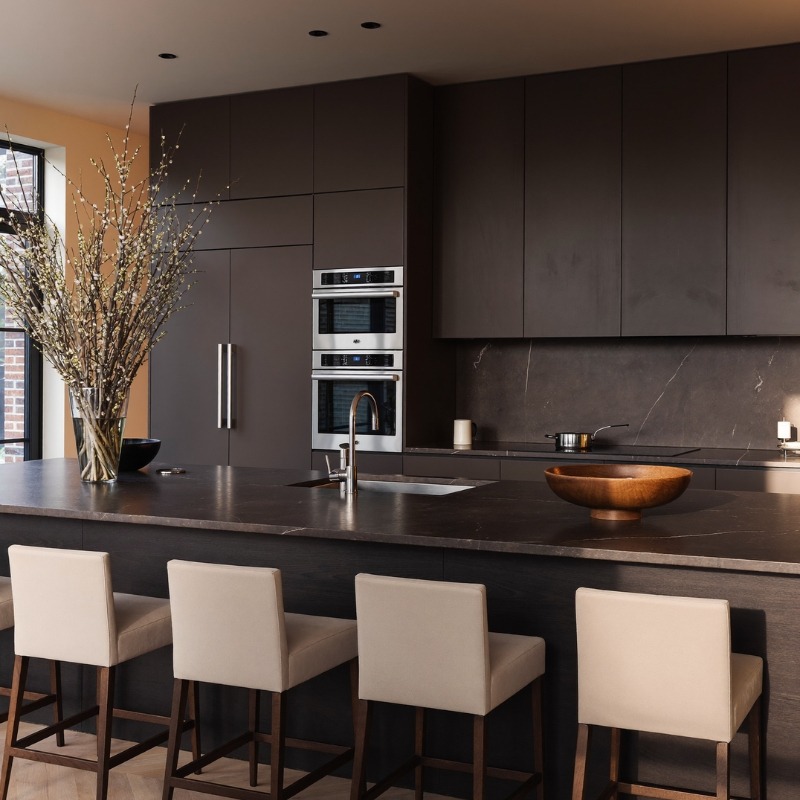
The finish doesn’t change how it’s fabricated
Whichever way you go, the slab is cut and edged the same; the finish has no bearing on how the benchtop should be made. What matters is the hands doing it: a qualified stonemason working to the latest WorkSafe Victoria guidelines on silica for safe cutting and installation. We supply the slab and connect you with an approved installation partner for the fabrication and fitting, so that stage always sits with someone qualified.
Material is part of the same conversation. Natural stone is beautiful and long-lasting, and reputable fabricators are well set up to work it safely. If you’d rather an engineered surface, the industry has shifted toward silica-free quartz, the look and durability people wanted from engineered stone, without the crystalline silica risk. We stock a range of it beside the natural stone, so you can weigh both up in one place.
Matching the finish to how you live
Before you confirm anything, run your kitchen through a few honest questions. Do you host big lunches where wine, citrus and tomato sauce get flung around? Are small kids likely to drag toys and utensils across the bench? Does the space double as a homework or craft zone? Is it flooded with natural light that shows every streak? Tick more than a couple and honed is probably your friend, it simply hides more of daily life.
Interior style pulls in the same direction. Minimalist coastal homes around Torquay lean honed dolomite for its soft, sandy hand. Glossy Southbank apartments run polished granite to echo the city lights. Heritage terraces tend to sit honed Carrara against original architraves. None of these is a rule. Just a sense of where each finish feels at home.
Leaning toward marble for a family kitchen? Our piece on the benefits of marble for busy households pairs well with this one.
Finish mistakes that trip people up
Choosing from a small sample only. A little chip exaggerates gloss and tells you almost nothing, so view a full slab under lighting like your own. That’s the single biggest reason to select from real stock rather than a display piece.
Ignoring the edge profile. A shark-nose catches light differently from a mitred waterfall leg, so test both finishes on a mock-up before you decide.
Skimping on sealer. A cheap sealant might do on a polished top and quietly underperform on honed marble.
Overlooking the splashback. A polished bench next to matte splashback tiles can feel disjointed. Ask for the sample boards together, and remember many stones come in matching slab and tile, so you can carry one look across the bench and splashback.
Assuming every stone behaves the same. Honed granite fights etching better than honed marble. The finish never overrides the material underneath it.
Beautiful stone, more within reach than you’d think
There’s a stubborn assumption that marble and large-format stone are strictly high-budget territory. Often, they’re not. Buying straight from a wholesale supplier that’s open to the public strips out the layers in between, so a considered, quality finish tends to be more attainable than people expect, and seeing the full range in person is how you find it, with the affordable and the premium sitting side by side on the same floor.
Which is really the whole point. The fastest way to settle honed versus polished is to stand in front of the actual slabs. At the Attila showroom and warehouse in Campbellfield, you can compare both finishes under real light across marble, dolomite, quartzite, granite, porcelain and silica-free quartz, then select the exact piece for your project. Open to everyone (homeowners, builders, designers, stonemasons), no appointment, wholesale pricing on show.
Bring your plans or measurements, take your time, and choose with your eyes on the real thing.
Common questions
Does a honed benchtop really need more upkeep than a polished one? Not necessarily. A honed finish can show fingerprints, oils and marks differently, while a polished surface may make etching and scratches more noticeable. Both should be cleaned with a pH-neutral cleaner and sealed with a high-quality impregnating sealer when required. We recommend Aqua Mix Sealer’s Choice Gold, which can provide protection for up to 15 years when correctly applied.
Can I mix honed and polished in one kitchen? Happily. A honed island for tactile contrast with a polished perimeter to bounce light under the cabinets is a common, deliberate combination. Just keep the stone colour consistent so it reads as intentional.
Will a matte sealer make polished stone look honed? No. Sealers protect the stone but do not change its physical finish. To achieve a honed appearance, the stone must be mechanically honed by an experienced stonemason. Existing polished surfaces can sometimes be refinished, but this should be assessed professionally.
Does finish affect resale? Barely. Both hold value when kept well, and Melbourne buyers read stone quality and colour first. Finish is usually secondary, and it can be changed professionally anyway, so it’s rarely a deal-breaker.
Before you order
Your finish shapes more than the look; it shapes how the surface handles everyday Melbourne life, from a coffee spill on a cold morning to bare. So stand in your kitchen for a moment, picture the light through the day, and run the honest questions above. If any doubt lingers, see the slabs under real light before you order. Better still, come see them in person; ten minutes with a full slab tells you more than any screen, and it’s the surest way to live happily with the stone for years.
Share this Post